


陰と陽を動きの中で考える:絶対なものは何もない / Yin and Yang in Movement: Why Nothing Is Absolute
- Tetsuya Tee Tomitsuka
- 20 hours ago
- 6 min read

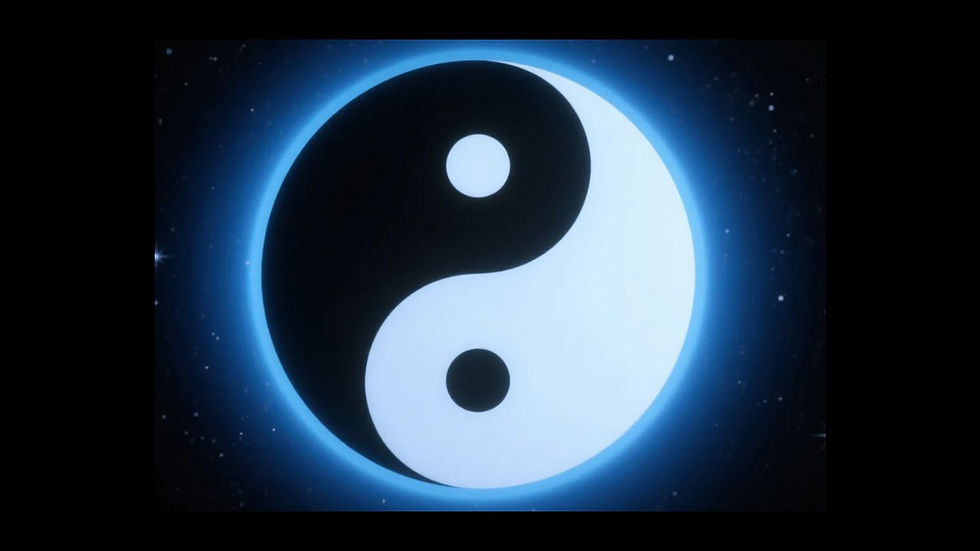
おそらく、あなたもこの白黒の円、太極図を見たことがあるでしょう。
滑らかに流れる光と影の渦、それぞれに小さな反対色の点がある。
この2つの形は始まりも終わりもなく、互いに流れ込んでいるように見えます。
この象徴的なマークは、陰と陽の動的なバランス、つまり関係性の中にある対極を表しています。
さて、私にとってこれが何を意味するのか、今から解きほぐしていきましょう。
You’ve likely seen this black-and-white circle, called the Taijitu—a smooth swirl of light and dark, each containing a small dot of its opposite.
The two shapes seem to flow into each other endlessly, with no clear beginning or end.
This iconic symbol represents the dynamic balance of yin and yang—opposites that exist in relation.
Now, let me unravel what it means to me.
私自身、長い間海外で生活する中で、この東洋哲学を象徴するかのようなシンボルについて何度も尋ねられてきました。
そのたびに感じていたのは、「これは単なるマークではない」ということです。
この陰陽のシンボルは、私にとって一つの“考え方そのもの”です。
世界をどう見るか、自分をどう捉えるか——その土台のようなものです。
今日から少しずつ、このシンボルが持つ意味を、自分なりの言葉でほどいていこうと思います。
Having lived abroad for many years, I’ve been asked about it countless times since the symbol is kind of believed that it represents the whole of eastern philosophy.
And each time, I felt the same thing—this is not just a symbol.
For me, yin and yang is not decoration or theory.
It is a way of seeing the world—and of understanding myself within it.
Starting today, I’d like to slowly unfold what this symbol means, in my own words.
陰と陽という言葉を聞くと、多くの人はシンプルな対立を思い浮かべます。柔らかいと硬い、静と動、受動と能動。
しかし、もしそれだけだとしたら、この概念はここまで長く残ってはいないはずです。
When we hear “yin and yang,” we often imagine simple opposites—soft and hard, stillness and movement, passive and active.
But if that were all there is, this idea would not have endured for so long.
より深いところでは、この考え方はもっと曖昧で、もっと流動的です。
そして、少し直感に反するものでもあります。
At a deeper level, this idea is far more fluid—and perhaps a little uncomfortable to grasp at first.
絶対的なものは何もない。
すべては関係の中で変化する。
Nothing is absolute.
Everything shifts within relationship.
陰と陽は“関係性”である
Yin and Yang as Relationship
陰と陽は、固定された性質ではありません。
それは“状態”ではなく、“関係”です。
何かが陰か陽かは、それ単体では決まりません。
必ず、何かとの比較の中で初めて意味を持ちます。
Yin and yang are not fixed qualities.
They are not states, but relationships.
Nothing is inherently yin or yang on its own—it only becomes so in comparison to something else.
この考え方は、身体の動きの中でとてもわかりやすく現れます。
たとえば、ヨガです。
This becomes very clear when we look at physical movement—especially in yoga.
ヨガは一見すると、穏やかで静かな「陰」の実践のように見えます。
激しいトレーニングと比べれば、確かにそう見えるでしょう。
At first glance, yoga appears gentle, inward, almost “yin-like,” especially when compared to intense physical training.
しかし、その中に入っていくと、境界はすぐに曖昧になります。
But once you step inside it, those boundaries begin to dissolve.
ヨガの中にある揺らぎ
The Fluidity Within Yoga
一つのセッションの中でさえ、私たちは陰と陽の間を行き来しています。
Even within a single session, we move constantly between yin and yang.
チャイルドポーズとウォーリアポーズを比べれば、その違いは明確です。
If we compare Child’s Pose and Warrior Pose, the contrast is clear.
チャイルドポーズは、重力に身を委ねるような感覚。
ウォーリアポーズは、地面を押し返すような力。
Child’s Pose invites surrender into gravity.
Warrior Pose demands that we push back against it.
しかし、その違いもまた、視点に依存しています。
And yet, even this contrast depends on perspective.
チャイルドポーズはウォーリアポーズと比べれば陰ですが、シャバーサナと比べればどうでしょうか。
Child’s Pose may feel yin compared to Warrior—but what happens when we compare it to Shavasana?
完全に力を抜き、ただ横たわるシャバーサナ。
そこにはほとんど「行為」がありません。
In Shavasana, there is almost no doing—only complete release.
その視点から見ると、チャイルドポーズにはまだ“意志”があります。
わずかな緊張、わずかな方向性。
From that perspective, Child’s Pose still contains intention—a subtle structure, a quiet engagement.
つまり、同じポーズでも、その位置づけは変わるのです。
The same posture changes its nature, depending on what we place it next to.
それは陰か陽か?ではなく、何と比べているのか。
It is not “What is it?” but “Compared to what?”
経験は常に相対的である
Experience Is Always Relative
私たちの感じ方もまた、固定されたものではありません。
Our experience is never fixed.
ある日は心地よかった動きが、別の日には重く感じられることもあります。
A movement that feels light one day may feel heavy the next.
静けさが安らぎになることもあれば、逆に不安を浮かび上がらせることもある。
Stillness can be comforting—or it can reveal restlessness.
陰と陽は、常に入れ替わりながら存在しています。
Yin and yang are constantly transforming into each other.
陰の中の陽、陽の中の陰
Yin Within Yang, Yang Within Yin
太極図の中にある小さな点は、その変化の可能性を示しています。
The small dots within the Taijitu suggest the possibility of change.
どんな状態も、そこに留まり続けることはありません。
No state remains as it is.
強さの中には、すでに緩みが含まれている。
静けさの中には、すでに動きが芽生えている。
Within strength, there is already softness.
Within stillness, movement is already beginning.
ラベルを手放す
Letting Go of Labels
私たちはつい、世界を固定した言葉で理解しようとします。
We tend to fix the world into labels.
しかし、その瞬間に、本来の流れを見失ってしまうのかもしれません。
And in doing so, we may lose sight of its true fluidity.
陰と陽は、答えではありません。
それは問いのあり方です。
Yin and yang are not answers.
They are a way of questioning.
最後に
Closing Reflection
完全な陰も、完全な陽も存在しません。
あるのは、ただ移り変わる関係だけです。
There is no pure yin, no pure yang—only shifting relationships.
バランスとは、どこかに到達するものではなく、その揺らぎの中に身を置き続けることなのかもしれません。
Balance is not something we arrive at—it may be something we continue to move within.
今回の話は、そのほんの入り口にすぎません。
このシンボルには、まだ言葉にしきれない多くの意味が含まれています。
This is only a beginning.
There are still many layers within this symbolthat cannot be fully captured in words.
これからも少しずつ、別の角度からこの考え方を見ていきたいと思います。
日常の中で、どう生きたものとして使えるのか——
And so, I will continue exploring it—from different angles, through everyday experience.
その探求自体が、すでに陰と陽の流れの中にあるのかもしれません。
Perhaps even this exploration is already part of that very flow.
Tee トミツカ / Tee Tomitsuka
New Horizon Personal Training
Comments